
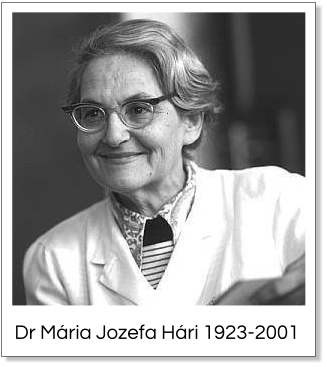
One day, during a lecture that would quietly reshape the way we understood effort, perception, and human motivation, Dr. Mária Hári began not with theory, but with a story. She opened The Adventures of Tom Sawyer by Mark Twain and read aloud the passage where Tom transforms the burden of whitewashing a fence into a sought-after privilege. It seemed simple, almost playful—but as she paused, the room shifted. What initially appeared to be a clever childhood trick revealed itself as something far more foundational: a window into how human beings come to experience effort, how meaning is assigned, and how easily the line between work and play can be redrawn. In that moment, it became clear that this was not just a literary reflection, but a living principle—one that extends far beyond the page and into the shaping of a child’s reality.
Parents and educators are the architects of a child’s perception of their own abilities and challenges. They hold the key to shaping whether a child with Cerebral Palsy sees their efforts as a burden or as a pathway to discovery, growth, and joy.
If adults frame every task as hard work, therapy, or something the child must do, the child will likely internalise the belief that their life is filled with struggle and obligation. But if the same challenges are approached with curiosity, creativity, and a sense of purpose, the child will begin to see their efforts as meaningful and even enjoyable.
The way a parent or educator presents an activity—whether it’s standing, grasping, or walking—makes all the difference. If they focus on what the child can’t do or how much harder they have to work, the child may begin to feel discouraged, seeing themselves as “less than” others. But if they highlight progress, celebrate effort, and integrate learning into everyday play and experiences, the child is more likely to develop resilience, motivation, and a sense of achievement.
Children absorb the attitudes and energy of those guiding them. If they sense frustration, pity, or a fixation on limitations, they may internalise a belief that their life is defined by struggle. But if they are surrounded by people who see possibilities, create exciting challenges, and reinforce the idea that their actions have meaning, they will learn to approach their journey with curiosity and determination.
Parents and educators, therefore, do more than just teach skills—they shape a child’s self-perception. They have the power to help the child view their world not as something that is filled with obstacles, but as a space where every challenge holds the potential for growth and discovery.
Quote from The Adventures of Tom Sawyer by Mark Twain “Whitewashing the fence”
“Tom said to himself that it was not such a hollow world, after all. He had discovered a great law of human action, without knowing it—namely, that in order to make a man or a boy covet a thing, it is only necessary to make the thing difficult to attain.
If he had been a great and wise philosopher, like the writer of this book, he would now have comprehended that Work consists of whatever a body is obliged to do, and that Play consists of whatever a body is not obliged to do. And this would help him to understand why constructing artificial flowers or performing on a treadmill is work, while rolling ten-pins or climbing Mont Blanc is only amusement.
There are wealthy gentlemen in England who drive four-horse passenger-coaches twenty or thirty miles on a daily line in the summer, because the privilege costs them considerable money; but if they were offered wages for the service, that would turn it into work and then they would resign.”
This passage is deceptively simple, yet it reveals a deep structure of human motivation.
At one level, Twain is describing desire. What is freely available rarely holds our attention; what is restricted, effortful, or exclusive becomes charged with value. Tom’s discovery is not intellectual—it is experiential. By turning fence-painting into something rare and privileged, he transforms drudgery into something others long to participate in.
But Twain goes further. He dismantles the idea that work and play are defined by the activity itself. Instead, he shows they are defined by relationship:
- Work is bound to obligation
- Play is born from freedom
The same action—identical in form—can belong to either category depending entirely on whether it is imposed or chosen. This is a far more nuanced (lényegesen összetettebb és árnyaltabb) inversion of how we typically think about effort. It is not the effort that determines the experience, but the meaning attached to it.
The example of wealthy men driving coaches sharpens this paradox. They willingly expend time, energy, and money to do something that, under different conditions (if paid), would become intolerable. Payment introduces obligation; obligation dissolves joy. What was once identity and pleasure becomes transaction and burden.
At a deeper level, Twain is pointing toward something more subtle:
Human beings are not motivated purely by ease or comfort—we are moved by agency, meaning, and perceived autonomy.
We will climb mountains, endure strain, and repeat effort endlessly—if the action feels self-directed and significant. Remove that sense of authorship, and even the simplest task becomes heavy.
This insight extends far beyond Tom’s fence:
It applies to education, parenting, therapy, creativity, and even identity itself. The moment a person feels compelled, something contracts. The moment they feel invited, something opens.
So the real “law” Twain uncovers is not just about making things desirable—it is about how freedom shapes experience.
What we are allowed to choose, we invest with life.
What we are forced to do, we resist—even if we would otherwise love it.
And that is where the passage becomes quietly powerful:
It asks not what we are doing, but how we are positioned in relation to it.
For a child with Cerebral Palsy, Twain’s insight into the nature of work and play takes on a deeply personal dimension.