
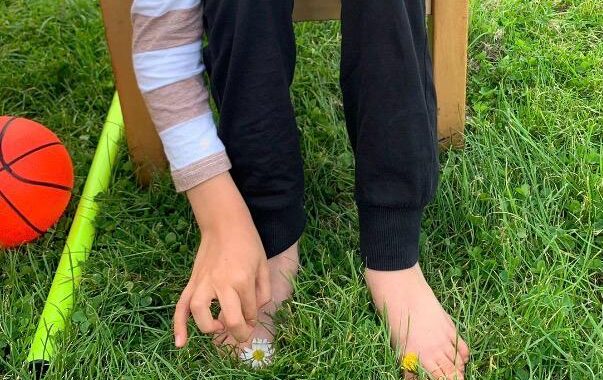
Rigid foot splints are widely used to maintain alignment, prevent contracture, and provide structural control in children with neurological and musculoskeletal conditions.
However, their interaction with living tissue raises important considerations regarding adaptability, pressure distribution, skin integrity, and long-term functional movement of the foot and lower limb.
Prolonged enclosure also limits natural skin ventilation, reducing airflow and increasing heat and moisture at the interface, which can affect tissue resilience over time.
In addition, reduced active movement within a fixed position may contribute to localised muscle disuse and atrophy, particularly when devices are worn for extended daily periods without sufficient variation, reassessment, or accommodation of growth and physiological change. Rigid splints are used instead of introducing and teaching movement that releases tension and supports natural strengthening of developing living tissue structures.
Beyond the physical, there are also secondary layers that are often under-acknowledged: the emotional and psychological responses associated with restricted movement, sensory limitation, and repeated discomfort. These may include distress, frustration, reduced tolerance, and altered body awareness, particularly in children whose development relies heavily on continuous sensory-motor feedback and environmental interaction.
In this context, rigid splints can function in opposition to their intended purpose, restricting the natural movement required for circulation, tissue health, and neuromuscular development.
The human foot is a dynamic biomechanical system. It continuously adjusts to load, ground reaction forces, and postural variation. Any external device applied to it must therefore be evaluated not only in terms of intended alignment outcomes, but also in terms of ongoing physiological compatibility.
Rigid splints introduce a fixed interface into a variable system. While this may achieve short-term positional control, it may also reduce the capacity for micro-adjustment at the level of tissue, circulation, and skin.
Commonly observed effects in cases of prolonged or poorly adapted use include:
- persistent erythema at pressure points
- heat and moisture accumulation within enclosed areas
- delayed resolution of pressure marks
- localised pain responses
- skin breakdown in areas of repetitive load concentration
These outcomes are consistent with known principles of pressure, friction, and microcirculatory restriction in soft tissue biomechanics.
Importantly, these are not anomalous complications. They are expected physiological responses when a static load interface is applied over time to a living, adaptive structure.
The implication is that rigid splinting works against, rather than with, the needs of a living, adaptive system. In particular, skin integrity and discomfort in children should be considered primary indicators of interface compatibility, not secondary side effects.